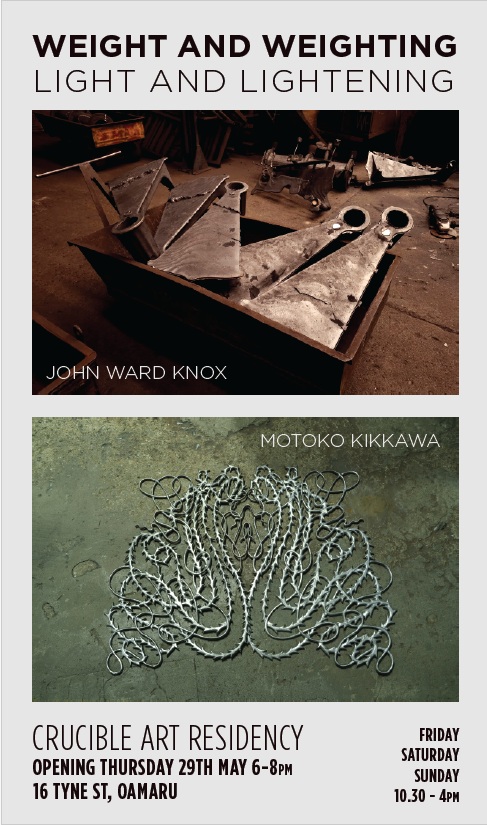
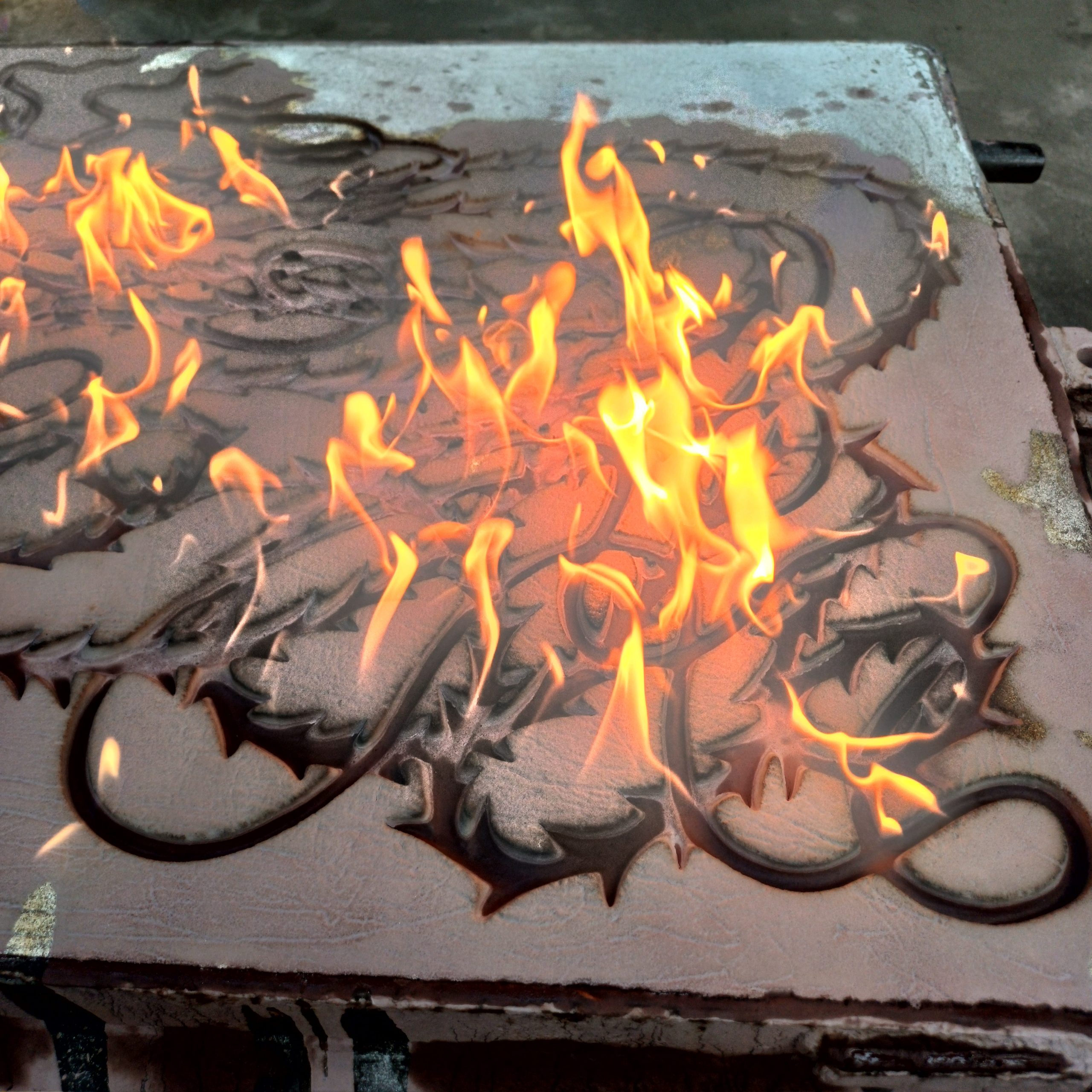
An exhibition featuring the work created in the Crucible Artist Residency (1/2025) by John Ward Knox and Motoko Kikkawa
Exhibition Statement: John Ward Knox
It is a strange marriage, artistry and industry. An artist is inclined to leave the creative process unfettered, to allow thoughts to drift idly, curiously into odd spaces, narrow crevices, open fields. An industrial process requires risk mitigation, constructive forethought and scheduled work patterns. These are not natural bedfellows.
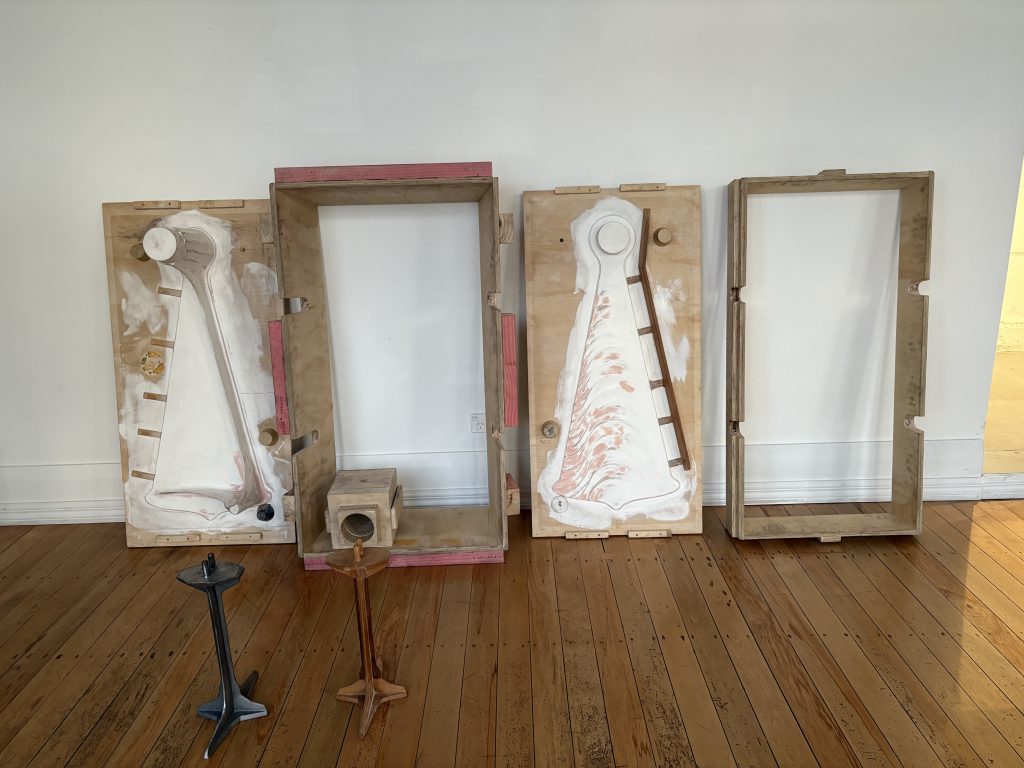
So to find myself with the opportunity to work with, through and occasionally against a dissimilar form of creation was a challenge that I decided to meet on terms of material properties. Rather than to try to force an idea into being that was unsuited to the material, I decided to try to find artistic scope within the strengths and characteristics of the medium. Rather, I should say mediums, as the iron is half of the picture. The other half is sand. This is the material that you must work through, in order to realise anything. The sand becomes the invisible protagonist of the object in front of you. It is this way with every part of the process, you must constantly flip between negative space to positive space, from inversions to resolutions. At times, getting the process internalised felt like walking upon one of Escher’s impossible staircases, just as you think you have something worked out, you come across a contradictory thought, waking towards you, upside down and back to front.
So. I thought about the properties of sand. Immense things, geological massifs crumbled into endless particulars. Once the sign for immutability – rock – turned into a material that shifts endlessly. I wanted to design something that connected these two senses, so I began to think of the way that sand takes on the form of great forces, as a negative. I thought about the place of deposition, the shore, and the way that sand is left after a retreating tide. It becomes soft evidence of something larger than itself.
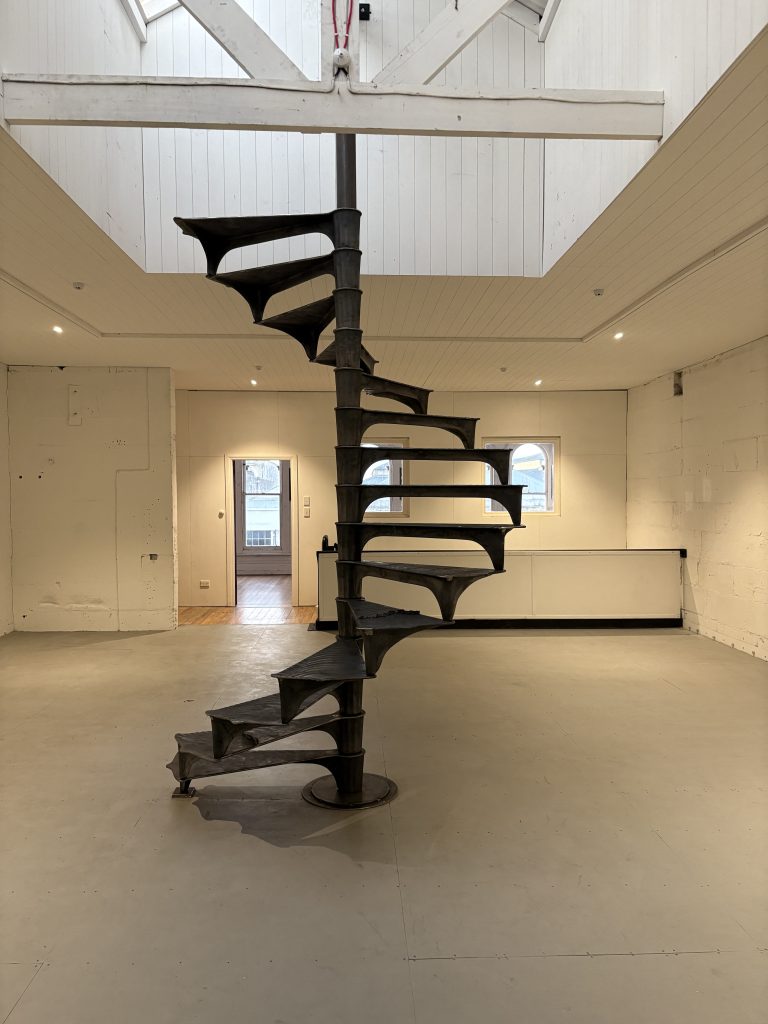
I am not yet knowledgable enough to have designed a system for my pattern to mitigate and tame these complex characteristics, so you will see that my staircase bears evidence all over of wildness. It is a process that has taken humanity thousands of years and millions of hands and minds to comprehend and to make useful, and I am very grateful to have been able to throw my own tiny drop of imagination into this collective pool of knowledge.
Next I thought about the great strength of rock again – of its huge capacity to be compressed and to remain unchanged – and how this property – compressive strength – allowed for architectures of unsurpassed levity – of the vaulted arches and buttressed forms of halls and churches and places of aspiration. This property – the absence of space in a material – allows for us to create space with the material. It morphs our perception of the air we move through and fill ourselves with. I wanted to create something that spoke of this contradiction, the incredible ways we humans have learned to use the matters around us in cycles and great burst of aspiration.
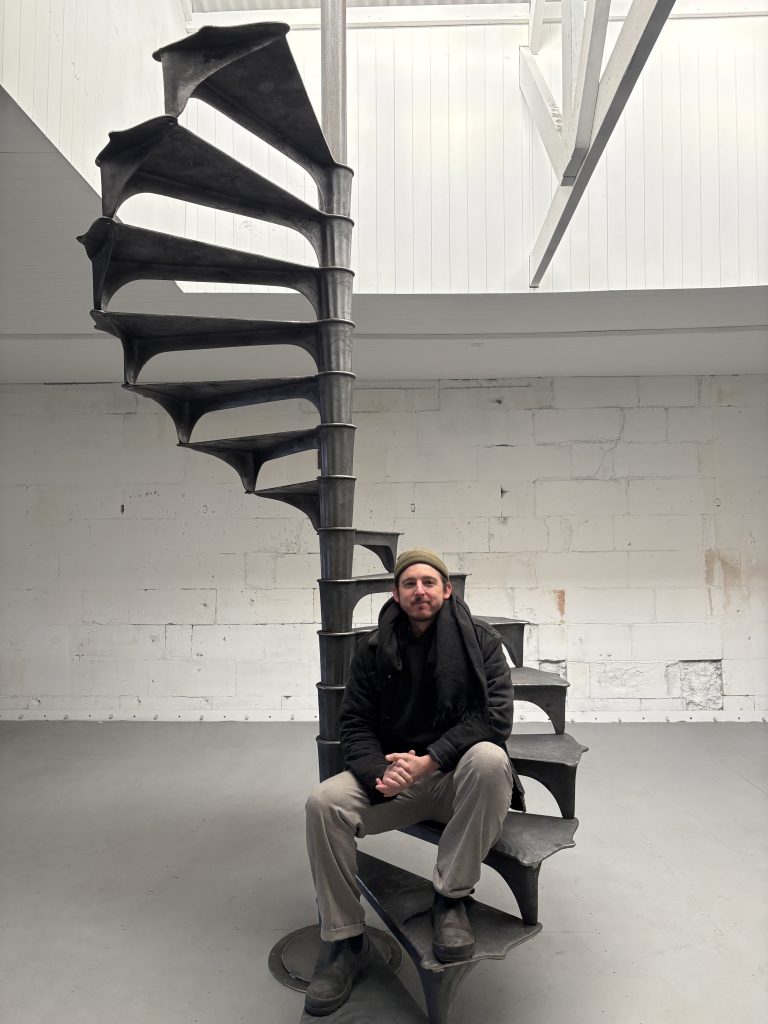
So I decided to make a spiral staircase. It has practicability at the forefront and the artistry is human, as well as individual. I do not wish to carve myself apart from the story of human aspiration, rather to insert myself into it, to work with material limitations that become artistic strengths – the form is largely dictated, by the practical needs of our bodies. We must find a surface for our feet that is not too close and not too far, must be able to trust and believe in the stability of the world that we are engaging with. So it must be solid and stable, but it must also not be a visual burden, an ugliness or an affront. This is the challenge that I decided to give myself, to create something beautiful as well as practicable, to show the raw properties of the material, and to let the processes speak through the object also.
So you will see artefacts of failure upon the object – fissures and seams and trapped gasses and areas where the material has behaved idiosyncratically, wildly, as though it has personality and unpredictable drive. In molten form, this iron is alive, 1300 plus degrees hot, a temporary liquid that has huge weight and capricious desires – it wishes to run and to harden, to melt and to freeze and to compress itself back into stability. These things are all happening from the moment it leaves the crucible and enters the mould. It is chasing depth and space and stillness but it does so with turbulence and heft and danger.
I wanted to work with the strengths of the material to create something that will straddle the worlds of art and practicality, and so hopefully outlive me in use as well as thought.
Exhibition Statement: Motoko Kikkawa
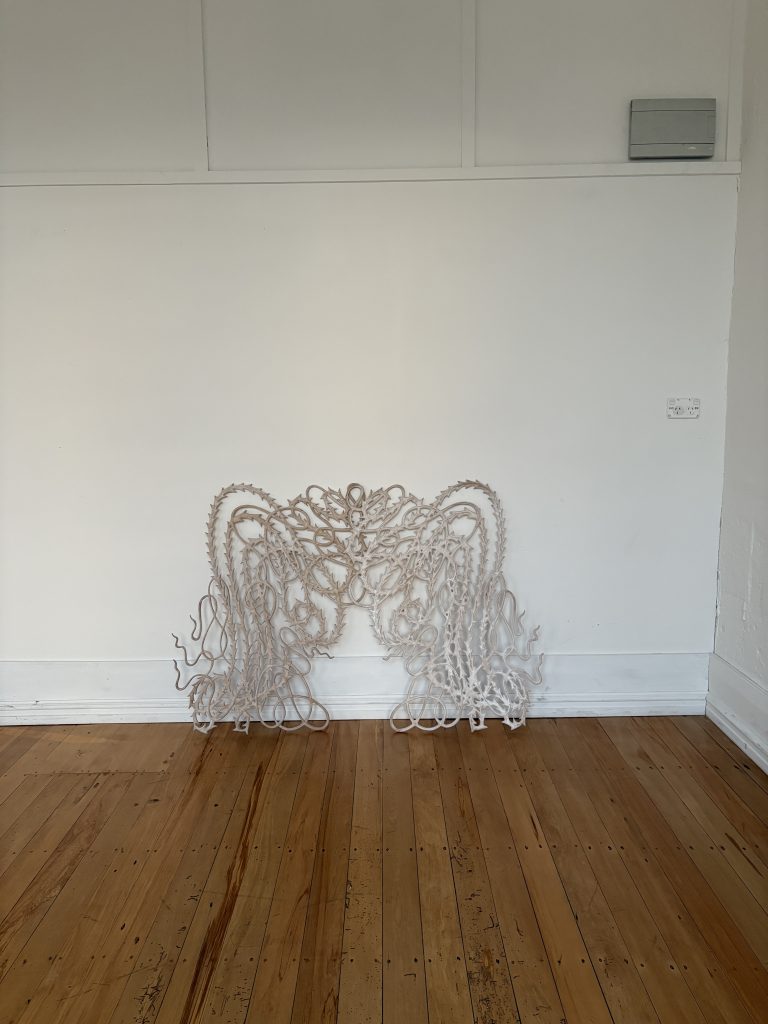
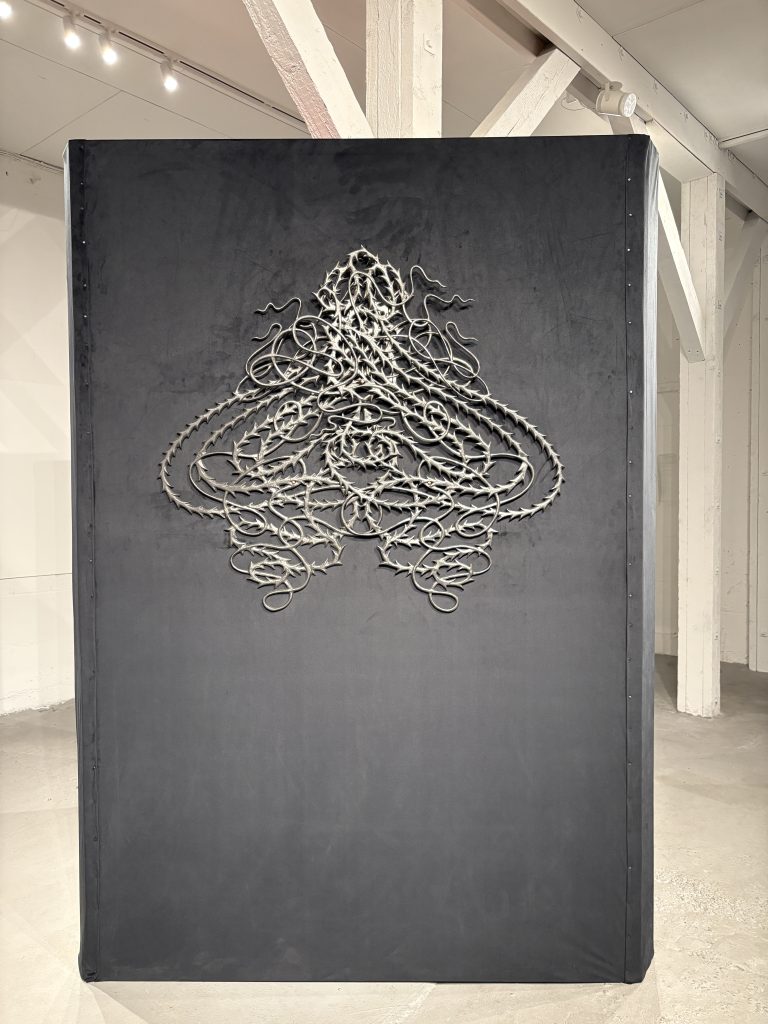
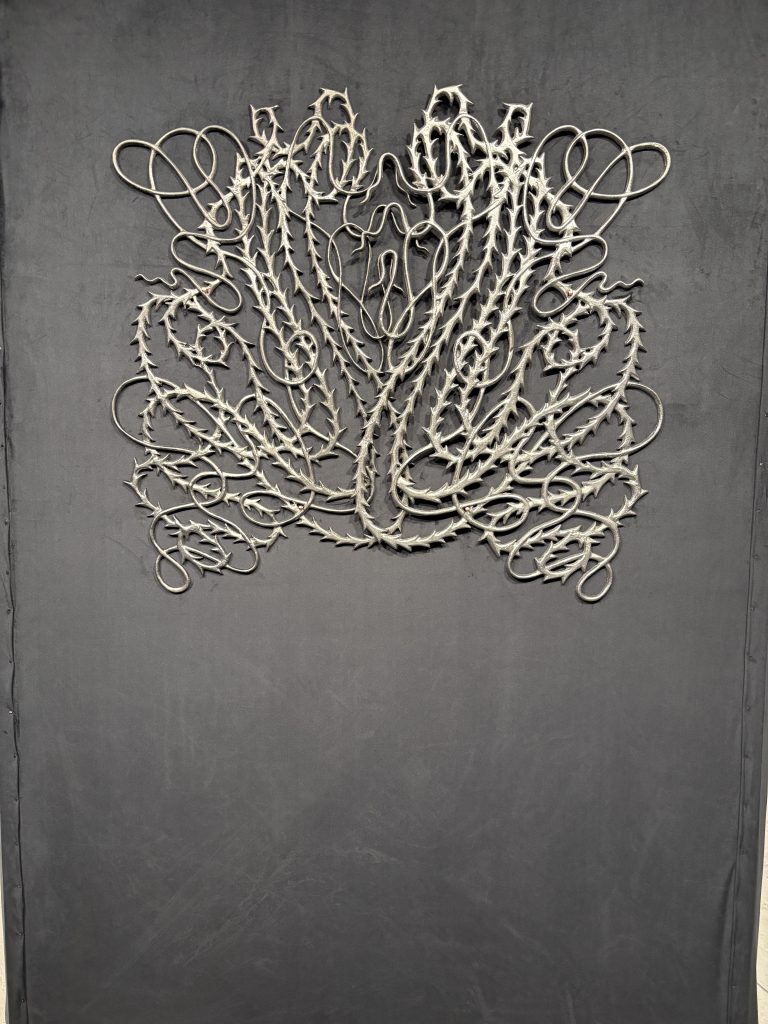
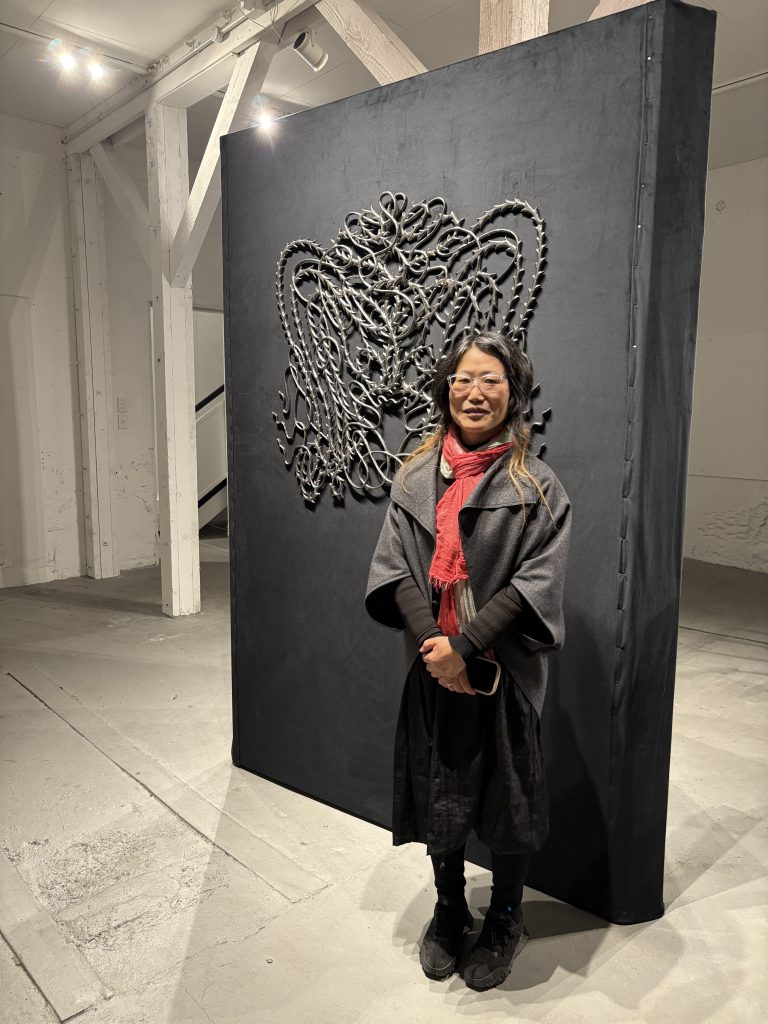
Art with industrial techniques and tools ….
While I was grinding I was thinking about Baruch de Spinoza (1632-1677) just because he became a lens polisher instead of being a professor of university.
I had huge freedom while working to think like him.
What if actually mineral controlling us?
They are just sitting and organic life move them here to there.
In our world, not moving means deaths.
If you move a lot you get praise.
For example if you run fast or fly overseas you seem to be succeeding.
Artists shift things a lot.
We are agitating the world, yeah!